Low Voltage Inverters for 120/240V 60Hz Systems

figure 1 – Low Voltage Inverters

Low-voltage (LV) inverters that can be connected to 120/240V 60Hz systems are commonly used in residential, commercial, and industrial applications. These inverters convert DC power (from sources like batteries or solar panels) into AC power compatible with standard North American electrical systems. Below is a list of popular LV inverters that support 120/240V 60Hz output:


1. SolarEdge SE7600H-US (HD-Wave Inverter)

  • Input Voltage: 120/240V AC

  • Output Voltage: 120/240V AC, 60Hz

  • Power Rating: 7.6 kW

  • Features:

    • High efficiency (up to 99%).

    • HD-Wave technology for lightweight and compact design.

    • Optimized for solar systems.

  • Use Case: Residential and commercial solar installations.

  • Websitesolaredge.com


2. Enphase IQ8 Microinverters

  • Input Voltage: Low-voltage DC (from solar panels).

  • Output Voltage: 120/240V AC, 60Hz.

  • Power Rating: Up to 300W per microinverter.

  • Features:

    • Modular design (one inverter per solar panel).

    • Grid-forming capability for off-grid operation.

    • High reliability and monitoring capabilities.

  • Use Case: Residential solar systems.

  • Websiteenphase.com


3. Schneider Electric Conext SW Series

  • Input Voltage: 12V, 24V, or 48V DC.

  • Output Voltage: 120/240V AC, 60Hz.

  • Power Rating: 3.5 kW to 6 kW.

  • Features:

    • Pure sine wave output.

    • Built-in transfer switch for grid-tie or off-grid use.

    • Compatible with solar and battery systems.

  • Use Case: Off-grid and hybrid solar systems.

  • Websiteschneider-electric.com


4. Outback Power Radian Series

  • Input Voltage: 48V DC.

  • Output Voltage: 120/240V AC, 60Hz.

  • Power Rating: 4 kW to 8 kW (stackable for higher power).

  • Features:

    • Grid-tie, off-grid, and hybrid capabilities.

    • High surge capacity for heavy loads.

    • Compatible with Outback’s energy storage systems.

  • Use Case: Off-grid and hybrid systems.

  • Websiteoutbackpower.com


5. SMA Sunny Boy Inverters

  • Input Voltage: Low-voltage DC (from solar panels).

  • Output Voltage: 120/240V AC, 60Hz.

  • Power Rating: 3.8 kW to 7.7 kW.

  • Features:

    • High efficiency (up to 97.5%).

    • Integrated web monitoring.

    • Robust design for outdoor use.

  • Use Case: Residential and commercial solar systems.

  • Websitesma-america.com


6. Victron Energy MultiPlus-II

  • Input Voltage: 12V, 24V, or 48V DC.

  • Output Voltage: 120/240V AC, 60Hz.

  • Power Rating: 3 kW to 5 kW.

  • Features:

    • Pure sine wave output.

    • Built-in charger and transfer switch.

    • Parallel and three-phase capability.

  • Use Case: Off-grid, marine, and RV applications.

  • Websitevictronenergy.com


7. Fronius Primo Series

  • Input Voltage: Low-voltage DC (from solar panels).

  • Output Voltage: 120/240V AC, 60Hz.

  • Power Rating: 3.8 kW to 7.6 kW.

  • Features:

    • High efficiency (up to 98.1%).

    • Integrated Wi-Fi for monitoring.

    • Snap-in design for easy installation.

  • Use Case: Residential solar systems.

  • Websitefronius.com


8. Magnum Energy MS-PAE Series

  • Input Voltage: 12V, 24V, or 48V DC.

  • Output Voltage: 120/240V AC, 60Hz.

  • Power Rating: 4.4 kW to 6 kW.

  • Features:

    • Pure sine wave output.

    • Built-in transfer switch.

    • Compatible with solar and battery systems.

  • Use Case: Off-grid and hybrid systems.

  • Websitemagnum-dimensions.com


9. Growatt MIN Series

  • Input Voltage: Low-voltage DC (from solar panels).

  • Output Voltage: 120/240V AC, 60Hz.

  • Power Rating: 3 kW to 6 kW.

  • Features:

    • High efficiency (up to 98.1%).

    • Built-in Wi-Fi for monitoring.

    • Compact and lightweight design.

  • Use Case: Residential solar systems.

  • Websitegrowatt.com


10. Tesla Powerwall Inverter

  • Input Voltage: Low-voltage DC (from Powerwall battery).

  • Output Voltage: 120/240V AC, 60Hz.

  • Power Rating: 5 kW continuous, 7 kW peak.

  • Features:

    • Integrated with Tesla Powerwall battery.

    • Seamless backup power during outages.

    • Solar and grid compatibility.

  • Use Case: Residential energy storage and solar systems.

  • Websitetesla.com/powerwall


Key Considerations When Choosing an Inverter

  • Power Requirements: Match the inverter’s power rating to your load requirements.

  • System Type: Ensure compatibility with your system (grid-tie, off-grid, or hybrid).

  • Efficiency: Higher efficiency inverters save energy and reduce costs.

  • Monitoring and Control: Look for inverters with remote monitoring and control features.

  • Warranty and Support: Choose reputable brands with good warranties and customer support.

This article was generated by AI and verified by humain.

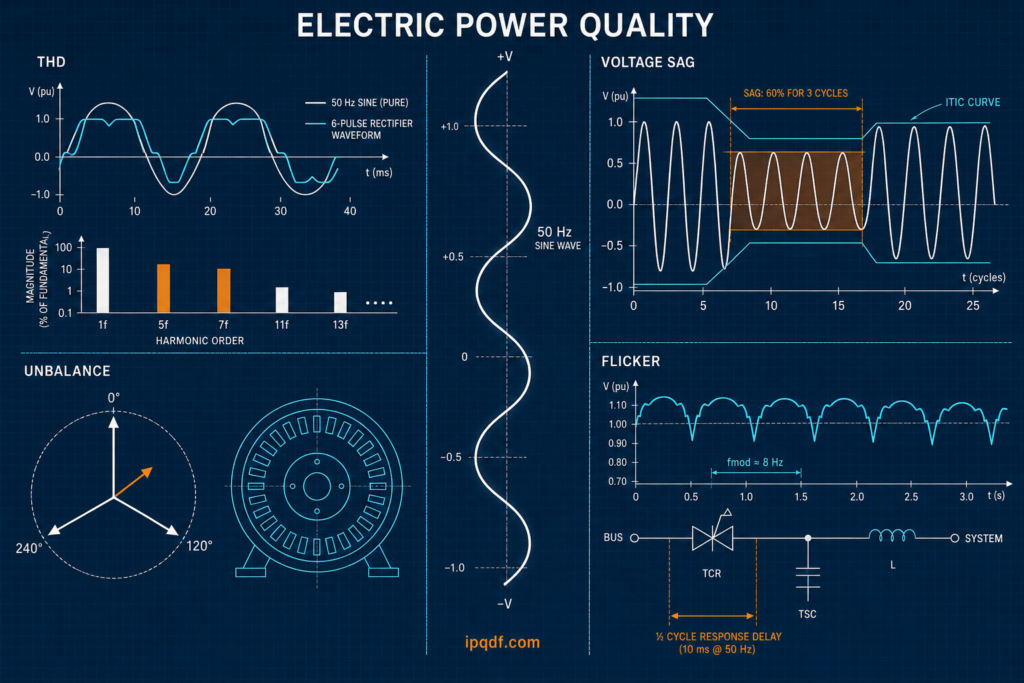
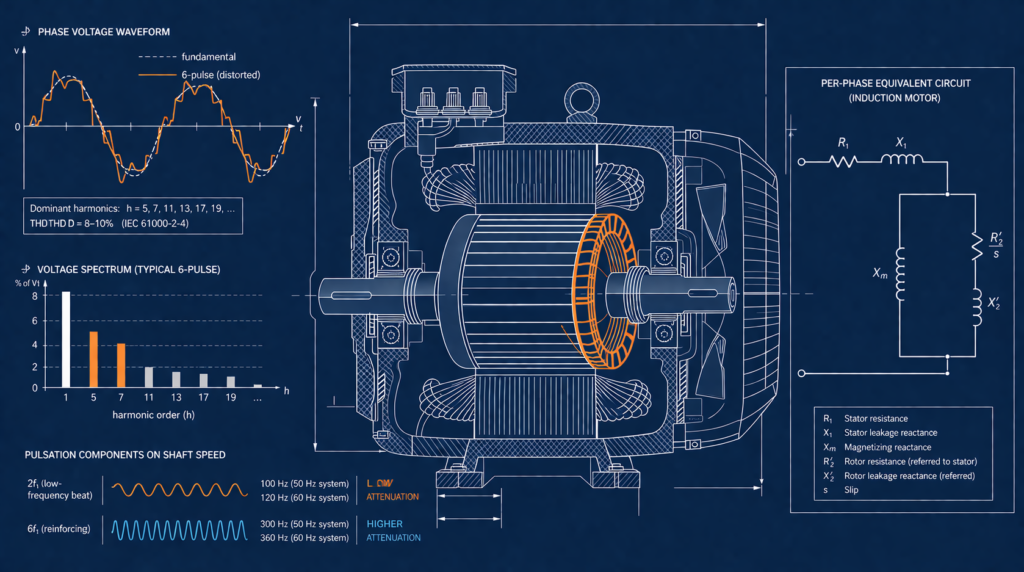
Advanced single-phase motor for single-phase and/or weak distribution grids

Advanced single-phase motors are designed to be uses where larger single-phase motors are needed and/or where the distribution has a weak short-circuit level, because they use technologies that overcome the traditional limitations of conventional single-phase induction motors — especially for high power (tens of HP) and weak rural grids.  Please visit Selecting the Right High Horsepower Drive for Rural Settings for more information.

Here are the main reasons.

1️⃣ Very Low Starting Current (Key Difference)

Conventional single-phase motors:

  • 6–8 × full-load current (FLA)
  • Large voltage sag on long feeders
  • Severe flicker
  • Utility complaints

Advanced designs:

  • Typically 1.5–2.5 × FLA
  • Grid-friendly starting
  • Minimal voltage dip

This is usually achieved by:

  • Electronic control of magnetization
  • Rotor field manipulation
  • Soft-start behavior built into the motor

This single feature alone makes them “advanced”.

2️⃣ Special Rotor Technology (Not Standard Induction)

Many high-power single-phase motors use:

Written-pole / programmable rotor field

or

Permanent-magnet assisted rotor

or

Electronic commutation assistance

These allow:

  • High starting torque with low current
  • Stable operation over load range
  • High efficiency

A normal single-phase induction motor cannot do this efficiently at high power.

3️⃣ High Efficiency Comparable to 3-Phase Motors

Traditional single-phase motors:

  • Lower efficiency
  • Poor power factor
  • High losses

Advanced motors:

  • Efficiency close to premium IE3 / NEMA Premium
  • High power factor (often >0.95)
  • Lower heating

This is a major engineering improvement.

4️⃣ Built-In Power Electronics

Many designs include:

  • Controller module
  • Smart starting algorithm
  • Electronic phase shifting
  • Protection and diagnostics

So the motor behaves partly like:

Motor + soft starter + controller in one unit

5️⃣ Ability to Reach High Horsepower on Single Phase

Historically:

  • Single-phase motors rarely exceeded ~10–15 HP reliably

Advanced motors:

  • 25 HP
  • 50 HP
  • 75 HP+
  • Even 100 HP in some cases

This is a huge technological step for rural electrification.

6️⃣ Power Quality Friendly (Important for Your Field)

From a PQ perspective they:

  • Reduce voltage sag
  • Reduce flicker (Pst / Plt)
  • Reduce feeder disturbance
  • Lower inrush harmonic distortion
  • Improve system stability on weak grids

That’s why utilities often prefer them over phase converters.

7️⃣ Better Torque Characteristics

They provide:

  • High locked-rotor torque
  • Smooth acceleration
  • Good pull-up torque
  • Stable speed regulation